
Privacy Policy & Data Protection
We are committed to being open, honest, and accountable. Read our policies below to understand how we operate and how we protect the people we serve.
Equality, Diversity & Inclusion
Equality, Diversity & Inclusion
Your Learning Voice Equality and Diversity Policy
Clients
Your Learning Voice CIC are committed to providing equal opportunities for all clients regardless of their race, culture, religion, language, or ability.
We positively welcome people of all races, languages, beliefs, and backgrounds and strive to provide all clients with positive self-images and values and to help them feel included.
Your Learning Voice promotes positive recognition, understanding, knowledge and celebration of differences.
We will ensure that the opportunities and where clients are at the centre of each action taken.
Staff
It is Your Learning Voice CIC’s policy to positively value and respect people regardless of their gender, ethnic origins/racial groups, religions, cultures and linguistic backgrounds. Members of staff are employed because of their knowledge, qualifications and expertise and because they are considered to be the best person for the job.
Last Modified on the 01/01/2026
Next Review date: 01/01/2027
Your Learning Voice CIC Access Arrangements and Reasonable Adjustments
Section 1: Overview and scope of the policy
1.1 What is the scope and purpose of the policy? This policy is aimed at our customers, including learners, who use NCFE products and services and submit requests for Access Arrangements and Reasonable Adjustments.
Section 2: Definition
2.1 Overview of Access Arrangements and Reasonable Adjustments
The Equality Act 2010 requires Awarding Organisations to make Reasonable Adjustments to ensure a learner who has a disability as defined in the Act are not placed at a substantial disadvantage in comparison to learners with no disabilities.
Assessment should be a fair test of a learners’ knowledge and what they are able to do, however, for some learners, the usual format of assessment may not be suitable.
The provision for Access Arrangements and Reasonable Adjustments are made to ensure that learners receive recognition of their achievement so long as the equity, validity and reliability of the assessments can be assured. Such arrangements are neither concessions to make assessments easier for learners nor advantages to benefit the learners.
There are two ways in which access to fair assessment can be achieved, these are through:
• Access Arrangements – allow learners with specific needs, such as special
educational needs, disabilities or temporary injuries to access the assessment and show what they know and can do without changing the demands of the assessment.
The intention behind an Access Arrangement is to meet the particular needs of an individual learner without affecting the integrity of the assessment.
• Reasonable Adjustments – NCFE are required to make Reasonable Adjustments where a learner, who is disabled within the meaning of the Equality Act 2010, would be at a substantial disadvantage in comparison to someone who is not disabled.
NCFE are required to take all reasonable steps to overcome that disadvantage.
2.2 Definition of Access Arrangements
An Access Arrangement is any action that helps to reduce the effect of a disability or
difficulty that places the learner at a substantial disadvantage in the assessment situation.
Awarding Organisations and centres are only required by law to do what is ‘reasonable’ in terms of giving access. What is reasonable will depend on the individual circumstances, cost implications, and the practicality and effectiveness of the adjustment. Other factors, such as the need to maintain competence standards and health and safety, will also be taken into consideration.
Access Arrangements must not affect the integrity of what is being assessed.
Access Arrangements are approved or set in place before the assessment activity takes place; they constitute an arrangement to give the learner access to the assessment activity. The use of an Access Arrangement will not be taken into consideration during the assessment of a learner’s work.
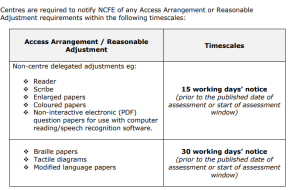
3. 1 Timescales for notifying NCFE of an Access Arrangement or Reasonable
Adjustment request Centres are required to notify NCFE of any Access Arrangement or Reasonable Adjustment requirements within the following timescales:
4.1 If you remain dissatisfied with the outcome of your request
If you or your learners remain dissatisfied following the outcome of the request that you have submitted, you may submit a complaint in line with our complaints procedure on the following website;
website: www.qualhub.co.uk.
Furthermore, you also have the right to appeal the outcome of an inspection of learner evidence relating to Access Arrangements and Reasonable Adjustments. Please refer to our Appeals Policy on our website: www.qualhub.co.uk.
Last Modified on the 01/01/2026
Next Review date: 01/01/2027
Safeguarding & Welfare
Safeguarding & Welfare
Your Learning Voice Safeguarding Policy (ADULTS)
1. Designated Safeguarding Officer
The designated Safeguarding Officer and all round responsible for Safeguarding is Charlene Bossman.
The deputy Safeguarding Officer is …
2. Definition of a vulnerable adult
Definition of a ‘vulnerable adult’ is a person over the age of 18 years old. The vulnerable adult may require assistance from community care services due to mental health issues or other disability.
3. Definition of abuse
Abuse can be defined as an when a person’s human and civil rights is violated. The main categories of abuse are.
- Physical abuse- this could be a hit or a slap, being given the wrong medication, being locked or force fed.
- Psychological abuse- this could include being threatened, not being able to make own choices, being bullied or isolated from other people.
- Financial abuse- taking money or property, being pressured into giving money or changing will, misuse of benefits, not being allowed access to money.
- Neglect- not adhering to medication or physical care needs, not eating or drinking, not allowing access to appropriate health or social services, being left in wet or dirty clothes.
- Sexual abuse- being touched or kissed in an inappropriate way which you do not consent to.
- Discrimination- not respecting a person’s beliefs, disability, age, race, sexual orientation, gender, diet or cultural needs.
- Institutional abuse- a lack of personal care, lack of flexibility of bedtimes or waking, deprived environment and lack of stimulation.
4. Significant Harm
Defined, it exists where the vulnerable person suffers significant harm or is exposed to significant risk. It is not the intent that needs to be considered but the harm that has resulted from the act or omission and which should trigger Safeguarding Adults procedures. www.bathnes.gov.uk
5. Reporting Abuse
All staff of Your Learning Voice have a duty to report any suspicions, allegations, or disclosure to the designated Safeguarding Officers. The Safeguarding Officers will then support the staff member to inform the required Authority.
6. Perpetrators
Perpetrators can be family, friends, neighbours, or any one in connections with the vulnerable adult.
7. Recording, confidentiality, and data protection
- Contact the emergency services if a vulnerable adult is in immediate danger
- If the situation does not require immediate danger, inform safeguarding officers and they will support make a decision as to whether to contact social services or not.
- Fill in a Your Learning Voice Safeguarding form, ensuring that all actions made are recorded and then file.
- You MUST follow up on any actions made within 24 hours.
8. Whistle- blowing
Please refer to Your Learning Voice whistle blowing policy.
9. Training
ALL staff will undergo Safeguarding Training. To ensure they understand the importance and how to recognise signs of abuse.
10. Safe recruitment
ALL staff must have undergone DBS Check and references before they are able to begin employment with Your Learning Voice.
11. Responsibility
It is the responsibility of ALL staff, including volunteers to ensure they alert the safeguarding officer if they suspect or witness abuse of any kind of abuse to a vulnerable adult.
12. Monitoring this policy
This policy should be reviewed annually, to ensure that it is up-to-date with current legislation.
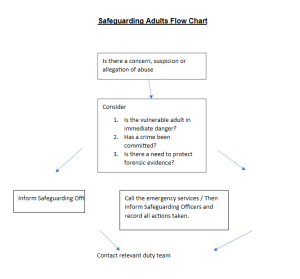
Immediate action or within 4 hours. Follow up within 24 hours.
Safeguarding Report Form
THIS DOCUMENT SHOULD BE MARKED ‘STRICTLY CONFIDENTIAL’
NAME OF ALLERGED VICTIM:
DATE OF BIRTH:
ADDRESS:
CONTACT NUMBER:
DETAILS OF GP
NAME OF GP ADDRESS:
TELEPHONE NUMBER:
REASON FOR REFERRAL:
DETIALS OF ALLEGATION, SUSPICION OR CONCERN:
Your Learning Voice Child Protection Safeguarding Policy (CHILDREN)
1. Designated Safeguarding Officer
The designated Safeguarding Officer and all round responsible for Safeguarding is Charlene Bossman.
The deputy Safeguarding Officer is Ricky Da Costa.
2. Definition of a vulnerable child
A vulnerable child is defined as being under the age of 18 years and currently at high risk of lacking adequate care and protection. Accordingly, all children are vulnerable by nature compared to adults, but some are more critically vulnerable than others. www.hgsf-global.org
3. Definition of abuse
Abuse can be defined as an when a person’s human and civil rights is violated. The main categories of abuse are.
- Physical abuse- this could be a hit or a slap, being given the wrong medication, being locked or force fed.
- Psychological abuse- this could include being threatened, not being able to make own choices, being bullied or isolated from other people.
- Financial abuse- taking money or property, being pressured into giving money or changing will, misuse of benefits, not being allowed access to money.
- Neglect- not adhering to medication or physical care needs, not eating or drinking, not allowing access to appropriate health or social services, being left in wet or dirty clothes.
- Sexual abuse- being touched or kissed in an inappropriate way which you do not consent to.
- Discrimination- not respecting a person’s beliefs, disability, age, race, sexual orientation, gender, diet or cultural needs.
- Institutional abuse- a lack of personal care, lack of flexibility of bedtimes or waking, deprived environment and lack of stimulation.
4. Significant Harm
The Children Act 1989 introduced Significant Harm as a threshold that justifies compulsory intervention in family life in the best interests of children. Physical Abuse, Sexual Abuse, Emotional Abuse and Neglect are all categories of SIGNIFICANT HARM.
5. Reporting Abuse
All staff of Your Learning Voice have a duty to report any suspicions, allegations or disclosure to the designated Safeguarding Officers. The Safeguarding Officers will then support the staff member to inform the required Authority.
6. Perpetrators
Perpetrators can be family, friends, neighbours, or any one in connections with the vulnerable adult.
7. Recording, confidentiality, and data protection
- Contact the emergency services if a vulnerable adult is in immediate danger
- If the situation does not require immediate danger, inform safeguarding officers and they will support make a decision as to whether to contact social services or not.
- Fill in a My Advocacy Safeguarding form, ensuring that all actions made are recorded and then file.
- You MUST follow up on any actions made within 24 hours.
8. Whistle- blowing
Please refer to My Advocacy whistle blowing policy.
9. Training
ALL staff will undergo Safeguarding Training. To ensure they understand the importance and how to recognise signs of abuse.
10. Safe recruitment
ALL staff must have undergone DBS Check and references before they are able to begin employment with My Advocacy CIC.
11. Responsibility
It is the responsibility of ALL staff, including volunteers to ensure they alert the safeguarding officer if they suspect or witness abuse of any kind of abuse to a child.
12. Monitoring this policy
This policy should be reviewed annually, to ensure that it is up-to-date with current legislation.
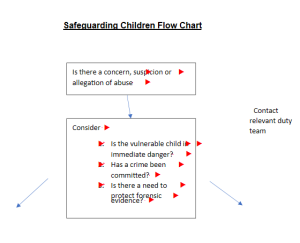
Immediate action or within 4 hours. Follow up within 24 hours.
Safeguarding Report Form
THIS DOCUMENT SHOULD BE MARKED ‘STRICTLY CONFIDENTIAL’ NAME OF ALLERGED VICTIM:
DATE OF BIRTH:
ADDRESS:
CONTACT NUMBER:
DETAILS OF GP
NAME OF GP ADDRESS:
TELEPHONE NUMBER:
REASON FOR REFERRAL:
DETIALS OF ALLEGATION, SUSPICION OR CONCERN:
Last Modified on the 01/01/2026
Next Review date: 01/01/2027
Student Support Policy
Looking after a mental health difficulty at YOUR LEARNING VOICE CIC
High levels of uncertainty around politics, the economy as well as adjusting to, and managing student life, can make it more challenging to manage an existing mental health difficulty.
These tips may help you to have as good experience as possible.
KEEP AN EYE ON HOW YOU ARE DOING
Whatever the nature of your mental health difficulty, you probably know the signs of a flare up in your symptoms.
For instance, it may be important to keep an eye out for sleep worsening. Changes in appetite, or particular behaviour. You may find it helpful to keep a symptom diary or checker and to use and strategies that you may know can help you, when you notice these changes.
If you spot these changes and they do not improve after a few days, then it might be useful to speak to health professionals involved in your care. This might be your GP or mental health care team.
Otherwise, if possible, it might help to speak To family, friends or people close to you, to see if they have spotted any changes in your symptoms. You could also ask someone to help you monitor this for few days.
PRIORITISE YOUR MENTAL HEALTH & WELLBEING
It is important to make your mental health and well-being a priority. This is important at all times, but particularly during times of uncertainty or change. When we are faced with more challenges than usual.
This might mean:
Putting your mental health above your studies, by taking breaks when you need them.
Not feeling obliged to engage socially if you need a break.
Taking a break from social media and the news if it making you feel more anxious or worried.
It could be useful to sit back and think about what supports your mental health. Write this down and make sure that you priorities these things as much as possible.
KEEP IN TOUCH WITH STUDENT SERVICES
Remember that (Your Learning VOICE CIC) will have a student support service. These teams can usually offer a range of advice and support around mental health and wellbeing and can be a valuable source of support.
You might want to consider making an initial appointment. If you’ve already accessed the service, you could book a review appointment.
These can usually offer a range of advice and support around mental health and wellbeing and can be highly valuable source of support.
ACCESS NHS SUPPORT
Whether you are accessing support from your GP or a mental health care team, it is really important that you continue to attend review appointments and stay on top of any medications that you are taking. If your not able to contact your GP or mental health care team there is also an out of service number 111 and press option 2 where you can speak to a mental health practitioner.
It might be easier when you struggling to miss review appointments or run out of medication. Whilst this is understandable, it can have a big impact on your mental health, both in the short and long term.
Think about using a calendar on your phone or laptop to keep track of appointments or, if possible, ask family or friends to remind you.
USE YOUR SUPPORT NETWORK
Your support network might include a few people or might be wide-ranging. It might include family members, friends, flatmates and health professional such as GP, it could also include personal tutors, mental health mentors or advisor and other Your Learning Voice CIC staff.
Talk to them about any worries you have managing your mental health at the moment. Friend and family in particular might be able to remind you what has helped you before and support you todo those things.
DON’T FORGET ABOUT YOUR PHYSICAL HEALTH
Whilst your mental health is a priority, it is important not to forget about looking after your physical health too. The body and the mind are connected so taking care of one will help the other. Things that might be helpful to bear in mind include:
- Getting some fresh air and sunlight when you can.
- Try to eat regularly. And include fruit and vegetables in your diet.
- Include physical activity everyday. There are lots of options you can do in your room without any equipment.
- Look after any physical health conditions that you have. This might include taking regular medication.
- Try to have regular sleep pattern. As much as possible.
- Keep hydrated- options include water, tea, coffee, squash and fruit juices.
Looking after your physical health can feel challenging, so just do what you can. If you don’t manage them everyday, don’t be critical of yourself. Just try again the next day and use the support available to you to help you.
Last Modified on the 01/01/2026
Next Review date: 01/01/2027
Governance & Compliance
Governance & Compliance
Data Protection Policy and GDPR Policy
Personal data shall be processed fairly and lawfully and, in particular, shall not be processed unless –
(a) at least one of the conditions in Schedule 2 is met, and
(b) in the case of sensitive personal data, at least one of the conditions in Schedule 3 is also met.
In practice, it means that Your Learning Voice must:
• have legitimate grounds for collecting and using the personal data;
• not use the data in ways that have unjustified adverse effects on the individuals concerned;
• be transparent about how we intend to use the data, and give individuals appropriate privacy notices when collecting their personal data;
• handle people’s personal data only in ways that would reasonably expect; and
• make sure we do not do anything unlawful with the data.
2.Personal data shall be obtained only for one or more specified and lawful purposes, and shall not be further processed in any manner incompatible with that purpose or those purposes.
In practice, the second data protection principle means that Your Learning Voice must:
• be clear from the outset about why we are collecting personal data and what we intend to do with it;
• comply with the Act’s fair processing requirements – including the duty to give privacy notices to individuals when collecting their personal data;
• comply with what the Act says about notifying the Information Commissioner; and
• ensure that if we wish to use or disclose the personal data for any purpose that is additional to or different from the originally specified purpose, the new use or disclosure is fair.
3.Personal data shall be adequate, relevant and not excessive in relation to the purpose or purposes for which they are processed.
In practice, it means Your Learning Voice CIC will ensure that:
• we hold personal data about an individual that is sufficient for the purpose we are holding it for in relation to that individual; and
• we do not hold more information than you need for that purpose.
So we should identify the minimum amount of personal data you need to properly fulfil your purpose. You should hold that much information, but no more. This is part of the practice known as “data minimisation”
4.Personal data shall be accurate and, where necessary, kept up to date.
To comply with these provisions Your Learning Voice CIC will:
• take reasonable steps to ensure the accuracy of any personal data we obtain;
• ensure that the source of any personal data is clear;
• carefully consider any challenges to the accuracy of information; and
• consider whether it is necessary to update the information.
5.Personal data processed for any purpose or purposes shall not be kept for longer than is necessary for that purpose or those purposes.
The Act does not set out any specific minimum or maximum periods for retaining personal data. Instead, it says that:
Personal data processed for any purpose or purposes shall not be kept for longer than is necessary for that purpose or those purposes.
This is the fifth data protection principle. In practice, it means that Your Learning Voice will need to:
• review the length of time you keep personal data;
• consider the purpose or purposes you hold the information for in deciding whether (and for how long) to retain it;
• securely delete information that is no longer needed for this purpose or these purposes; and
• update, archive or securely delete information if it goes out of date.
6.Personal data shall be processed in accordance with the rights of data subjects under this Act.
This is the sixth data protection principle, and the rights of individuals that it refers to are:
• a right of access to a copy of the information comprised in their personal data;
• a right to object to processing that is likely to cause or is causing damage or distress;
• a right to prevent processing for direct marketing;
• a right to object to decisions being taken by automated means;
• a right in certain circumstances to have inaccurate personal data rectified, blocked, erased or destroyed; and
• a right to claim compensation for damages caused by a breach of the Act.
7.Appropriate technical and organisational measures shall be taken against unauthorised or unlawful processing of personal data and against accidental loss or destruction of, or damage to, personal data.
In practice, it means Your Learning Voice CIC must have appropriate security to prevent the personal data you hold being accidentally or deliberately compromised. In particular, we will need to:
• design and organise your security to fit the nature of the personal data you hold and the harm that may result from a security breach;
• be clear about who in your organisation is responsible for ensuring information security;
• make sure you have the right physical and technical security, backed up by robust policies and procedures and reliable, well-trained staff; and
• be ready to respond to any breach of security swiftly and effectively.
Last Modified on the 01/01/2026
Next Review date: 01/01/2027
Confidentiality Policy
The aim of this document is to ensure that there is a clear confidentiality policy.
Confidentiality is about keeping things private between workers and clients/students.
There are only 3 reasons when confidentiality will be broken
1. The client wants the worker to tell other people the information they have shared.
2. The worker feels there is a risk of danger to the client/ learner or there is a risk of danger to other people from what the client/learner has said. In this case the worker will tell the client/learner, where possible first, as well as checking with management.
3. The regulator is asked to reveal information through law by a Court.
When a worker starts working with a client/ learner the client/ learner will be asked to sign a consent from. This gives the worker and Your Learning Voice permission to keep information about them.
Your Learning Voice will only keep information about the client/learner that the client/ learner themselves know, and this will be kept locked away at all times. All of the information kept by Your Learning Voice on the client/ learner can be seen by the person at any time.
Consent should always be given be the person themselves, unless consent cannot be given because of capacity issues. If the client is under 18 years old, then consent should be given by the parent or legal guardian, but sill explained clearly to the client/learner where possible.
Last Modified on the 01/01/2026
Next Review date: 01 January 2027
Conflict of interest Policy
What is the purpose of the conflicts of interest process?
The conflict-of-interest process is designed to protect the integrity of NCFE assessments.
We want to make sure they remain fair, and we also want to make sure individuals at your centre are protected where there is potential, or a perception, that they could be influenced by any personal interests.
What is a personal interest?
A personal interest is a Conflict of Interest that relates to a particular individual. A personal interest can be financial or non-financial in nature. So, for example:
• if a person investigating alleged malpractice is related to one of the Learners accused of malpractice that would be a personal interest
• if a person’s salary is related to the number of appeals, they uphold (or reject), that too would be a personal interest.
To determine whether a personal interest exists in a particular case, the relevant question to ask is whether:
• the person carrying out the assessment, investigation or appeal has any reason or incentive to make anything other than a good faith decision; or
• an informed or reasonable person would conclude that such a reason or incentive exists.
However, the conditions that refer to a ‘personal interest’ do limit what individuals with such an interest can do (and in some cases prohibit them from doing something altogether). We take this approach where the personal interest cannot be mitigated effectively.
Who is responsible for managing the conflict-of-interest process at your
centre?
Charlene Bossman is responsible for managing the conflict-of-interest process and must determine how Your Learning Voice CIC do so.
When do conflicts of interest declarations need to be submitted to NCFE?
As per our conflict-of-interest policy, the NCFE must be informed about conflicts of interest before the published deadline for entries of:
• any members of centre staff who are taking qualifications at their own centre which include internally assessed components/units
• any members of centre staff who are teaching and preparing members of their family (which includes stepfamily, foster family and similar close relationships), or close friends and their immediate family (e.g. son/daughter), for qualifications which include internally assessed components/units.
Declarations can be submitted using our web (Conflict of Interest declaration for centres | NCFE | NCFE form via QualHub.)
Once you have submitted your conflict of interest, you do not need to take any further action. The External Quality Assurance team from the NCFE will get in touch with you within 5 working days if we need any further information.
Last Modified on the 01/01/2026
Next Review date: 01/01/2027
File Keeping Policy
Why do we need to keep records?
• We keep records to monitor your progress
• We keep records so that we are able to justify our existence.
• We keep records to help improve practices
How records should be kept
• Records are kept locked away in a cabinet.
• Files are kept for 7 years and then disposed of with the upmost security.
Opening a case file
• A case will only be opened once agreed with by the client.
File contents
• Your Learning Voice service Referral Form
• Your Learning Voice Consent Form
• Your Learning Voice Authority to Process and Disclose Information
• Your Learning Voice Goal/s and Action Plan
• Your Learning Voice Risk Assessment
• Your Learning Voice Client Advocacy Agreement and Payment Agreement
• Your Learning Voice Client Case Notes
Hand writing
• Case notes MUST be typed up using the font Arial, size 12.
Letters
• Letters should be formal and should not be used for personal matters.
File closure
• A file can only be closed once work with the client has come to an end.
File reviews
• Files should be reviewed with supervisor every 3 months to ensure adequate advocacy support is being completed
Security
• Files must be kept locked away each day. Client details may be collected in the community but then they have to be filed away.
Last Modified on the 01/01/2026
Next Review date: 01/01/2027
Complaints, Appeals & Academic Integrity
Complaints, Appeals & Academic Integrity
Complaints and Compliments Policy Statements
Your Learning Voice CIC for high standards in everything that it does and welcomes feedback from ALL. Such feedback is invaluable in helping us evaluate and improve our work.
The objectives of the Compliments and Complaints Policy are to:
• Ensure everyone knows how to provide feedback and how a complaint will be handled.
• Ensure that complaints are dealt with consistently, fairly, and sensitively within clear and acceptable timeframes.
• Ensure that compliments and complaints are monitored and used to improve our services.
Your Learning Voice CIC will:
• Listen carefully to complaints and treat complaints as confidential, where possible
• Record, process, store and manage all complaints accurately and in accordance with the Data Protection Act 1998
• Investigate the complaint fully, objectively and within the stated timeframe.
• Notify the complainant of the results of the investigation and any right of appeal.
• Inform the complainant of any action that will be implemented as a result of the complaint, where appropriate
• Report, on a quarterly basis, the number of compliments and complaints received; the outcomes of investigations and any actions taken.
2. Definition of a Complaint
2.1 A complaint is any expression of dissatisfaction by an individual, whether justified or not.
• An individual may make a complaint if they feel we have:
• Failed to provide a service or an acceptable standard of service.
• Delayed in providing a service.
• Made a mistake in the way we have provided a service.
• Failed to act in a proper way.
• Provided an unfair service.
2.1.1 This policy and procedure relates only to complaints received about Your Learning Voice CIC and its services. Individuals who make complaints about partner organisations will be notified in writing within one working day of receipt of the complaint that they need to complain to the organisation they have the complaint with, and will be provided with contact details, where possible.
3. Compliments and Complaints Procedure
3.1 Compliments
Any verbal or written compliments will be recorded by the member of staff receiving the compliment and be passed to the appropriate manager for recording on the Compliments Register. Any member of staff identified as being the subject or contributing to any matter giving rise to the compliment will be notified within three working days. Feedback on compliments will be shared with employees at appropriate times.
3.2 Complaints
There are 3 stages to the complaints procedure:
• Stage One – Complaint
• Stage Two – Appeal
• Stage Three – Independent Review
Stage One:
Once a complaint is received the following will take place;
• The complaints officer will investigate the matter and respond within 7 working days.
• All complaints will be recorded within the data protection policy
Stage Two:
• If the client is not happy with the response the director will review the matter and respond within 7 working days
• Stage Three – Independent Review
If you are unsatisfied at any stage, you can raise your concerns to the NCFE Regulator at the following;
By phone*: 0191 239 8000 (or for our skills assessment products, 0300 102 1023)
By email: customersupport@ncfe.org.uk
In writing: Customer Recovery team, NCFE, Q6, Quorum Park, Benton Lane, Newcastle upon Tyne, NE12 8BT
Face-to-face: our representatives are always happy to help
Via Web Chat: available on all our web pages.
*Telephone calls may be recorded.
What they’ll need to know:
Your name
Centre number (if applicable)
A description of the complaint
Any names and/or dates you’ve noted, if you’ve already spoken to someone about this complaint
How you/others have been affected by the complaint
A contact number/email address and convenient time to contact you.
What they’ll do
They will always aim to resolve a complaint as quickly as they can. When this isn’t possible, they’ll fully investigate the complaint with the aim to resolve it efficiently, and they’ll keep you updated along the way.
The NCFE aim to respond to and/or resolve all complaints within 5 working days of receipt. If there are exceptional circumstances, they may take longer due to the complexity of the complaint. The NCFE will inform you if this is the case.
Once the complaint has been investigated fully, they’ll contact you with the outcome and to discuss any next steps. They’ll also be happy to provide a response in writing where appropriate.
If you’re not satisfied
If you’re not satisfied with how your complaint is being dealt with, you can request at any time for your complaint to be escalated. If, after we’ve done everything, the NCFE can help, you’re not satisfied with our final response, you can refer your complaint to our qualification regulators.
The regulators ask that the complaint is made within twelve months of the action you are complaining about, and that you have completed all stages of the awarding organisation’s complaints process. Here’s how to get in touch with them:
England – Ofqual
0300 303 3344
complaints@ofqual.gov.uk
Complaints, Ofqual, Earlsdon Park, 53-55 Butts Road, Coventry, CV1 3BH
Wales – Qualifications Wales
01633 373 222
report@qualificationswales.org
Qualifications Wales, Q2 Building, Pencarn Lane, Imperial Park, Coedkernew, Newport, NP10 8AR
Northern Ireland – Council for the Curriculum Examinations & Assessment (CCEA) Regulation
02890 261 200
complaints@ccea.org.uk
Council for the Curriculum Examinations & Assessment (CCEA) Regulation, 29 Clarendon Road, Clarendon Dock, Belfast, BT1 3BG
Last Modified on the 01/01/2026
Next Review date: 01/01/2027
Appeals Policy
1 Purpose
This policy forms part of NCEF’s quality assurance arrangement allowing you to outline your views or grievances in relation to a decision or action Your Learning Voice CIC has taken.
-
-
Scope
-
This policy relates to all awarding and end point assessment operation within and across NCFE.
-
-
Responsibilities/Duties
-
A designated centre contact with permission from the head of centre is responsible for adhering to this policy, to be read alongside the JCQ appeals booklet. Support is available from NCFE where required to submit appeals. Contact details can be found with the policy.
1.3 Definitions
-
Word/acronym
Definition
EPA
End point assessment
EPRS
Exam procedure review service
JCQ
Joint council for qualifications
-
Process
Overview of appeals
The purpose of an appeal is to ascertain if we have applied the correct processes, procedures, and policies in a fair and consistent way.
2.1Appeals exclusions and restrictions
This appeals procedure will not comprise:
-
A reassessment of external assessments
-
A review of assessment decisions
-
A review of the content of external quality assurance visit reports
-
An external quality assurance visit
-
A change to a decision/sanction imposed.
-
A change to the centre’s approval status
-
-
Appeal acceptance criteria
-
This list below details what types of appeal we’ll accept:
-
Outcome of an enquiry about results and an assessment decision.
-
Outcome of an application for reasonable adjustments or a special consideration.
-
Outcome of a maladministration or malpractice investigation
-
Outcome of a decision to impose a sanction resulting from a malpractice or maladministration investigation.
-
Outcome of a review of an appeal (stage 1) decision
-
Termination of product and centre approval status for maladministration or malpractice, or termination for breach of the centre agreement.
-
-
Who can submit an appeal?
-
Your Learning Voice CIC should submit an appeal on behalf of a learner or a group. Any other party who wants to be part of a case must inform us by writing which must include who and what your credentials are and Your Learning Voice CIC’s interests in it.
3.Stages of an appeal
There are two stages of an appeal, which we make available; these are:
3.1 Stage 1 – Preliminary Review
The first stage of a staff from NCFE will be appointed to handle this case. The staff have expertise with processes, procedures and policies.it takes 30 working days. Your request must be written and if your application does not include sufficient information or evidence, we’ll inform you in writing and include a final deadline for the submission.
3.2 Stage 2 – Appeal Hearing
The independent appeal committee must be minimum of two people to handle the case. A member from Your Learning Voice CIC and a member from NCFE staff who wasn’t part of the first stage 1.it takes 15 working days.
3.3 Fees
A fee to cover the administrative costs at each stage of the appeal will be charged in line with Your Learning Voice CIC fees.
3.4 Stage 1 – Preliminary Stage
3.4.1 Appeal acceptance
The decision on whether to accept the application for an appeal is based on:
-
When the appeal submitted falls within our acceptance criteria
-
If there is sufficient evidence that our relevant processes, procedures, and policies have not been consistently and fairly applied.
-
If any other documents have first been completed
-
If learners or centre maladministration or malpractice has occurred in relation to the process or appeal
-
The timescale of the application. If we reject an application, the reason will be provided with 5 working days.
3.4.2 Timescales following the acceptance of an appeal application.
We aim to action and resolve review of an appeal within 20 days of acceptance. Please remember in some cases, where the independent is not available within a time frame, the application may take longer than the twenty working days. We will update Your Learning Voice CIC of the timescale and the reason.
3.4.3 Appeal Review
-
Any readily available awarding organisation precedents
-
Any readily available regulators advice on similar matters
-
If we’ve properly and fairly applied our relevant policies
3.4.4 Appeal Outcome
Am appeal outcome letter will be sent via email to your designated centre of the 5 working days if decision making is made. Note it can either be upheld or rejected.
3.4.5 Appeal Upheld
If the stage 1 review found that we had not correctly applied our processes or procedures.an appeal outcome letter via email which will include remedial action to be completed.
3.4.6 Appeal Rejected
If all policies, processes were applied correctly in a fair way, we’ll send you an appeal outcome letter via email which include information on how to submit an appeal.
3.5 Appeal hearing
An independence appeals committee will be established to ensure there is additional level of independence.
3.5.1 Submitting an appeal to the independent appeals committee.
You have the right to submit the appeal to independence committee following the completion of the stage 1 appeals. Your request must be written if your application does not include sufficient information or evidence. We’ll inform you in writing and include a final deadline for submission.
3.5.2 Appeal acceptance
The decision to whether accept the application for an appeal is based on.
-
If the stage 1 appeal is completed
-
If the timescale of the application is in accordance with section 2.2
-
If you have supplied evidence that our relevant processes, procedures, and policies.
-
If the appeal submitted falls within the acceptance criteria
If stage 2 application is rejected, the reason is provided in writing within 5 working days. The same way it is accepted, you will receive it in the next 5 working days.
3.5.3 Appeal hearing
The purpose of the independent appeals committee meeting is to consider your appeal application and support evidence from both parties to determine reasonable doubt. The appeal committee will consider all evidence the stage 1 appeal. They will aim to make unanimous decision when determining the outcome of the appeal.
3.5.4 During the appeal hearing
The independence appeal committee may require representation from both parties to attend the appeal hearing either in person or via telephone. This will enable the members of the committee to question representatives from both parties.
In an appeal related to malpractice, the committee will consider on the balance of probabilities, whether there is sufficient evidence to support the findings of malpractice and how appropriate the original penalty or sanction was in the light of the JCQ malpractice regulations, awarding body precedents and any additional information provided by the appellant or awarding organisation.
Last Modified on the 01/01/2026
Next Review date: 01/01/2027
Suspected Malpractice Policies and Procedures
The document details the policies and procedures agreed by the JCQ awarding bodies for dealing with breach of security and malpractice investigations relating to candidates, centre staff and centres. The JCQ awarding bodies have separate procedures for investigating concerns relating to the conduct of examiners, moderators, and awarding body staff.
This policy is for the JCQ Suspected Malpractice Policies and Procedures apply to all candidates and to Your Learning Voice CIC’s centres and centre staff delivering JCQ awarding body qualifications. Where misconduct by examiners, moderators, or awarding body staff is suspected, the appropriate disciplinary procedures will be adhered to.
Failure by Your Learning Voice CIC to notify, investigate and report to an awarding body (NCFE) all allegations of malpractice or suspected malpractice constitutes malpractice.
This policy is established for Your Learning Voice CIC’s Use in Assessments: Protecting the Integrity of Qualifications.
Your Learning Voice CIC’s staff malpractice and maladministration
Ensure that staff involved in the delivery of assessments and examinations understand the key dates and deadlines and that there are robust procedures in place to ensure these are met.
Responsibilities
Charlene Bossman (Head of the Centre) Must ensure that where a candidate who is a child/vulnerable adult is the subject of a malpractice investigation, the candidate’s parent/carer/appropriate adult is kept informed of the progress of the investigation.
Information obtained by the Head of the Centre
All those interviewed or making a statement should be made aware that awarding bodies reserve the right to share their statements, records or transcripts of any interview(s) that are undertaken, with others involved in the case and other appropriate third parties as described in paragraphs and that this information may be shared at any stage during or after the investigation.
The rights of accused individuals – information gathering
If, in the view of the information-gatherer, there is sufficient evidence that an
individual may have committed malpractice, that individual (the candidate or
the member of staff) must:
• be informed (preferably in writing) of the allegation made against them;
• be provided with a copy of the JCQ document Suspected Malpractice:
Policies and Procedures:
http://www.jcq.org.uk/exams-office/malpractice;
• be made aware of all evidence that has been obtained during the
investigation which supports the allegation;
• know the possible consequences should malpractice be proven (as set out
in appendices 4–6);
• have the opportunity and sufficient time to consider their response to the allegations;
• be given an opportunity to submit a written statement in response to the allegations;
• be provided with a complete set of case documentation, in the event of the
case being referred to the awarding body’s Malpractice Committee;
• be informed that in the event that the case is referred to the awarding
body’s Malpractice Committee, they will:
• be provided with a complete set of case documentation
• have the opportunity to read, and make a statement in response to,
the case documentation
• have the opportunity to seek professional advice and to provide a
supplementary statement;
• be made aware of their right to appeal should a sanction be applied to
them (as set out in the JCQ document A Guide to the Awarding Bodies’
Appeals Processes).
Completing and submitting the report
The information obtained and actions taken must be reported to the NCFE.
The report must contain a statement of the facts of the case, including a
detailed account of the circumstances of the alleged malpractice and an
objective description of the information gathered during the course of the
investigation, and must include details of any exculpatory information (or
mitigating factors) found during the investigation process.
Making a decision
The Malpractice Committee determines that malpractice has occurred, it will
then seek to determine the appropriate sanction(s) to be applied, if any,
considering the least severe sanction first, considering any points in mitigation
and the appropriate measures to be taken to protect the integrity of the
examination or assessment and to prevent future breaches.
Sanctions
Sanctions imposed upon candidates will only be applied in relation to
assessments taken in the series/academic year in which malpractice has been
identified and, where appropriate.
Individuals may be subject to one or more sanctions.
Where a member of staff or contractor has been found guilty of malpractice,
an awarding body may impose one or more of the following sanctions:
Written warning
A written warning that if the member of staff commits malpractice within a
set period of time, further specified sanctions will be applied.
Training
The member of staff, as a condition of future involvement in the delivery of
the awarding body’s examinations and/or assessments, to undertake
specific training or mentoring within a particular period of time. The
awarding body may request written confirmation of the delivery of the
training.
Special conditions
Special conditions are imposed on the member of staff regarding their
future involvement in the delivery of the awarding body’s examinations
and/or assessments. For example, the member of staff must be supervised.
Suspension/debarment
The member of staff is suspended/debarred from all involvement in the
delivery or administration of the awarding body’s examinations and
assessments for a set period of time. Other awarding bodies, regulators,
and other organisations such as the Teaching Regulation Agency (TRA)
and Education Workforce Council (EWC) may be informed when a
suspension/debarment is imposed.
These sanctions will be notified to the head of centre who must ensure that
they are communicated to the individual(s) upon whom they have been
imposed and that the sanctions are adhered to.
Sanctions for centre staff malpractice: Your Learning Voice CIC
-
Written warning
-
Review and report procedures/action plans
-
Approval of specific assessment tasks
-
Additional monitoring or inspection
-
Removal of direct claims
-
Restrictions on examination and assessment materials
-
Independent invigilators
-
Suspension of candidate registrations or entries
-
Withdrawal of approval for a specific qualification(s)
-
Withdrawal of centre recognition/approval
Sanctions applied against candidates
-
Warning
-
Loss of all marks for a section
-
Loss of all marks for a component
-
Loss of all marks for a unit
-
Disqualification from a unit
-
Disqualification from all units in one or more qualifications
-
Disqualification from a whole qualification
-
Disqualification from all qualifications taken in that series
-
Candidate is debarred
Communicating decisions
The NCFE will normally only communicate directly with a candidate (or
the candidate’s representative) when they are a private candidate or the
awarding body has been liaising with the candidate directly regarding their
alleged involvement in malpractice
Last Modified on the 01/01/2026
Next Review date: 01/01/2027
Learner Policies & Assessment
Learner Policies & Assessment
Your Learning Voice Student and Payment Agreement
This document is an agreement between Your Learning Voice CIC and the Learner. We provide study programmes to individuals living in London. We provide classes to people aged 19+ and over in the following areas.
-
ESOL
-
IELTS
-
Life in the UK Preparation
-
Functional Skills English
-
Functional Skills Maths
-
Functional Skills ICT
-
NCFE in Supporting Teaching and Learning
-
NCFE CACHE Level 1 / 2 Technical Award in Development and Childcare
-
NCFE Early Years Educator
-
NCFE Health and Social Care
-
Education and Training L3 and 5
Confidentiality
ALL of your information is kept confidential, unless you agree for us to discuss or share information. We will only share information if you or others may be at risk of danger.
The Programmes of Study
This service is not free. By signing this document, you are agreeing to pay.
-
ESOL £450
-
IELTS £450
-
Life in the UK Preparation £330
-
Functional Skills English £275
-
Functional Skills Maths £275
-
Functional Skills ICT £275
-
NCFE Level 3 in Supporting Teaching and Learning £399
-
NCFE CACHE Level 1 / 2 Technical Award in Development and Childcare £499
-
NCFE Early Years Educator £1025 Levels 2- 3
-
NCFE Health and Social Care £499 Level 2
There is a sign-up fee of £50 for administration and materials used within the teaching sessions. However, if you are on benefits, there is funding options. Through the Flexible Support Fund provided by the Job Centre. Please inquire through Charlene Bossman.
Sessions
Sessions will be held twice a week for each subject. Learners will be expected to attend one session to engage in the learning process.
Timetable
TBC
Refunds
We are here for you! If you are not happy with the service or wish not to attend, then a full refund is payable. Please put your request in writing and we will issue the refund within 48 hours.
Any payments made has a 14-day cooling off period. This means that if you wish to withdraw within 14 days then all payments made will be refunded within 48 hours. You have the right to withdraw at any time. Please put your request in writing and give it to a member of the Your Learning Voice CIC staff.
PAYMENT AGREEMENT
I ......................................................... of........................................................................
................................................................................................................................
-
Agree to pay for the chosen tuition service.
-
Agree to attend session. If unable to attend, 24 hours’ notice is required, or payment will still be required.
-
I have the right to withdraw from this agreement at any point.
Signature ( Type your name) : ............................................................................
Date: ...............................................................
For Office use Management signature: ...............................................
-
-
Payment
Date Received
-
This document must be reviewed each session by the Operations Management Team member and the student.
Last Modified on the 06 June 2026
Next Review date: 01 January 2027
RPL and Credit Transfer Policy
For the purposes of this document, we will begin with the definitions;
RPL
Recognised Prior Learning
We at Your Learning Voice CIC understand the hard work and dedication it takes to complete any form of study.
Learners are assessed within the subject area to attain their current level. Where a learner has prior learning or credits, with the learner’s consent, we will seek to contact the issuing certification body and ensure that the document or evidence is accredited, legal and certified by the required regulatory organisations within the UK.
Your Learning Voice CIC will then contact NCFE Customer Support Line on 0191 622 1747 and complete the required steps to ensure the prior learning is considered.
Last Modified on the 01/01/2026
Next Review date: 01/01/2027
Operational & Business Continuity
Operational & Business Continuity
Contingency and Adverse Effects Policy
For the purposes of this document, we will begin with the definitions;
Contingency:
noun
a future event or circumstance which is possible but cannot be predicted with certainty.
"a detailed contract which attempts to provide for all possible contingencies"
Adverse Effect:
a negative or harmful result:
Since the Pandemic in 2020- 2022 we understand the importance of assessing risk and putting into plans actions that protects the health and safety of Learners and Staff. Although, Your Learning Voice CIC is a small Adult Learning Centre, we put our learners and staff health and safety first.
Where such issues / incidents arise, ALL staff at Your Learning Voice CIC will adhere to the laws and regulations set by the governing body at the time. In addition, we will complete the Risk Assessment forms and to make informed decisions
Where we are unfamiliar with the incident we will contact the local council, police, hospitals and other organisations where needs be.
Last Modified on the 01/01/2026
Next Review date: 01/01/2027
Risk Assessment
Health & Safety
Health & Safety
Your Learning Voice Health Safety Policy
Your Learning Voice CIC has a Health and Safety Policy and operates clear procedures to ensure we comply with our legal obligations and to ensure as far as reasonably practical, the health, safety and well being of all who work at Your Learning Voice CIC. All staff have a responsibility and duty to ensure that their working practices do not endanger themselves, colleagues or visitors.
All staff will receive induction training on fire alarms, evacuations, emergency procedures, first aid facilities and instruction on any hazardous process, equipment or substance used in their area of service. As a minimum all staff are expected to undertake the British Safety Council’s basic Health and Safety awareness course, which is available as an on-line course,
In roles where lifting and handling is required, you should ensure that you are fully trained and understand how to use any manual handling equipment.
Protective clothing must be worn, and equipment used at all time where this has been identified as a health and safety requirement.
FIRST AIDERS
Ensures that it has trained First Aiders. A list of qualified first aiders can be found in the Health & Safety Policy. You should ensure that you know how to contact the First Aiders for your area in the event of an emergency.
REPORTING ACCIDENTS AND INCIDENTS
If a member of staff has an accident at work they must report it to their line manager and ensure that an Accident Report Form is completed and sent to the service manager, Resources as soon as possible. Accidents or incidents occurring outside of My Advocacy Cic but whilst on CH business should be reported on an incident Report Form
WORKING FROM HOME
Staff working from home have a responsibility to ensure that they are working safely and not putting themselves at risk, have appropriate space to work in and use the correct equipment.
STAFF WELFARE
The initial responsibility for your wellbeing rests with line managers and you are encouraged to seek support from your line managers if you are experiencing difficulties either at work or at home which are impacting or likely to impact upon your work.
Last Modified on the 01/01/2026
Next Review date: 01/01/2027